
What Is Google Mobile Services (GMS)?
Google Mobile Services (GMS) is a certified suite of Google apps and APIs — including Google Play Store, Google Play Services, and Google Pay — that comes pre-installed on authorized Android devices.
Unlike standard Android, GMS-certified devices are verified by Google to meet strict standards for security, performance, and enterprise compatibility. For system integrators building POS and kiosk solutions, this certification is the foundation that makes reliable, secure, and manageable deployments possible.

Core Advantages GMS Delivers for Enterprise
GMS-certified devices outperform non-certified alternatives across four critical dimensions: security, manageability, app ecosystem, and developer integration.
Google Play Store Support

Easily deploy and manage approved business apps across your entire device fleet — remotely, silently, and always up to date.
Remote Device Management

Remotely configure, monitor, and control all your POS terminals and kiosks from a single console, no on-site visits needed.
Regular Security Updates

Guaranteed security patches within 30 days of release, keeping your payment devices compliant and protected without extra effort.
Essential APIs&Frameworks

Tap into Google's ready-built tools — including Google Pay and authentication APIs — so your team can integrate faster and build with confidence.
Why GMS Is Important
for Payment Termails?
In payment transaction environments, security is not optional — it's foundational. GMS certification provides the multi-layered protection that every point-of-sale terminal demands.
POS terminals and self-service kiosks in retail, food service, transportation, and financial services process thousands of consumer card and mobile payment transactions every day. A single compromised device can expose cardholder data, trigger service outages, and create direct legal liability. GMS-certified devices address this threat holistically — from the firmware up — through Google's integrated security stack.
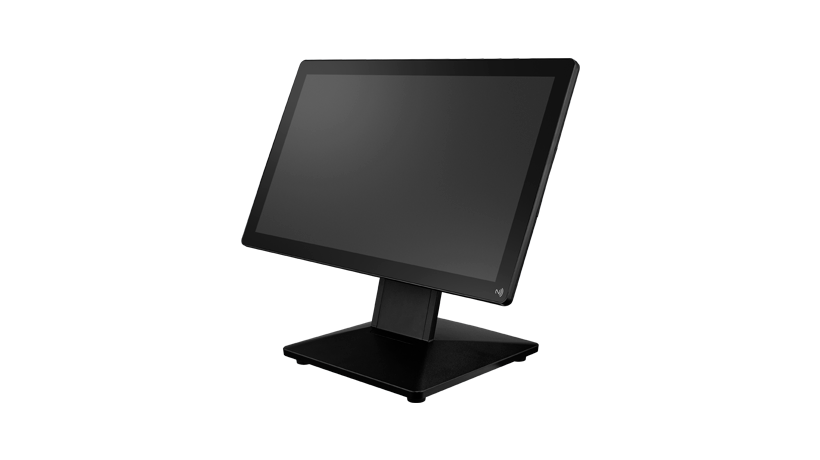
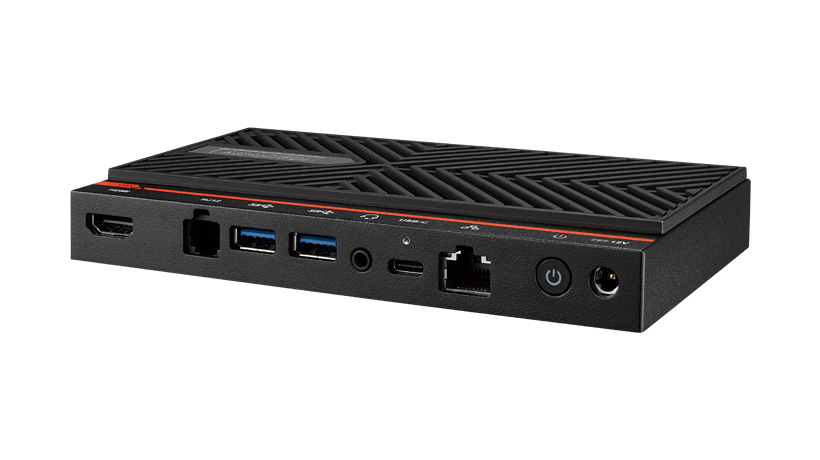
Advantech's GMS-Ready Devices

SSD for 5G Edge Computing in Data Logging Applications
Project Introduction
5G edge servers used in Data Logging applications must provide low-latency, high-bandwidth computing resources at the network edge. This enables faster and more efficient data processing. These resources are particularly useful in surveillance, in-vehicle, and aviation applications.
Project Requirements
The demand for mission-critical data loggers is driven by the need for reliable and accurate data collection in extreme environments with high-stress conditions. The use of storage servers or Network Attached Storage (NAS) enables secure and efficient storage and retrieval of mission-critical data — including maps, images, and video footage. NAS for mission-critical data also enable real-time data processing and analysis to empower situational awareness, intelligence gathering, and decision-making.
Project Description
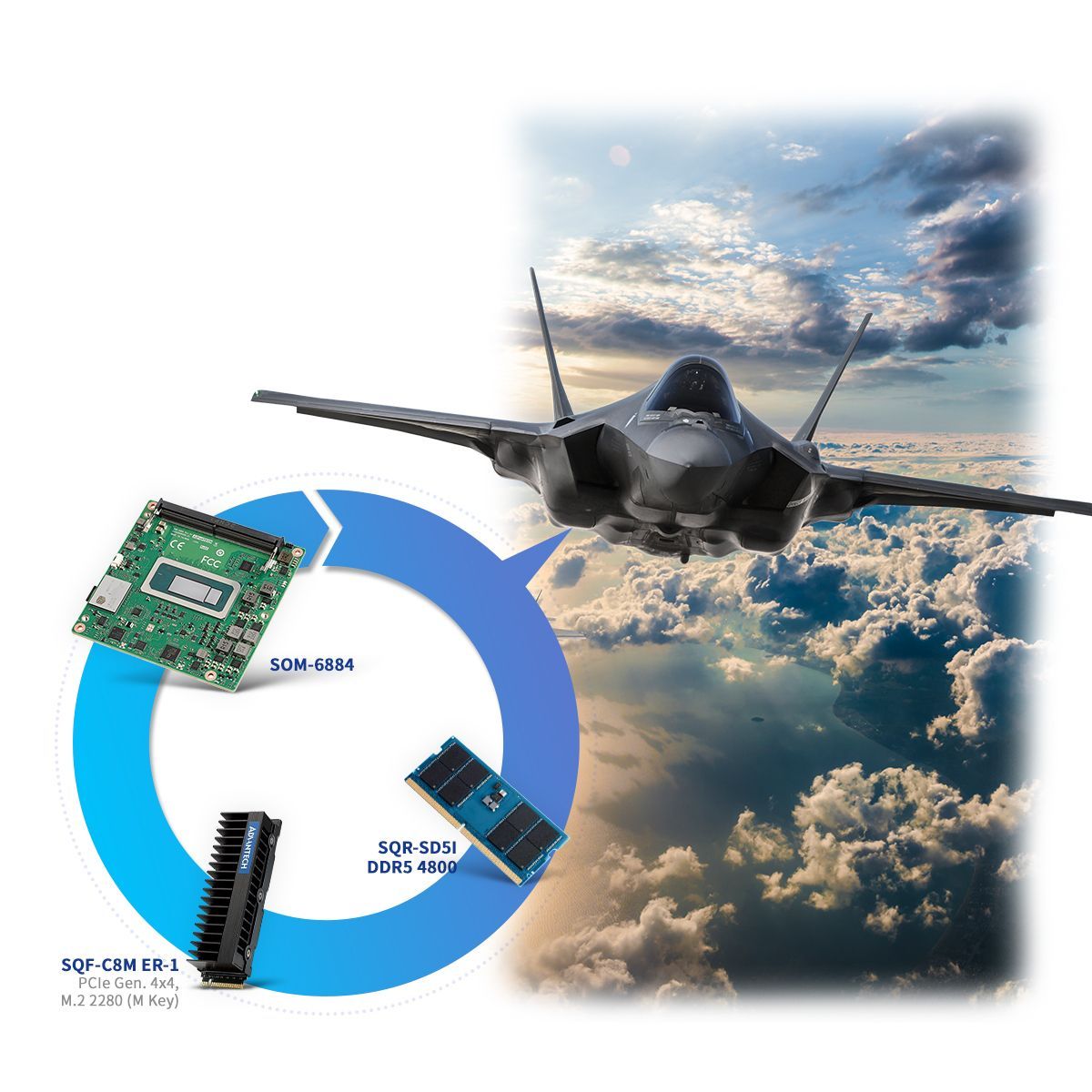
ER-1 SQFlash NVMe PCIe Gen4 SSD is designed for high-speed, low-latency data transmission and processes. ER-1 adopts KIOXIA’s BiCS 3D NAND Flash technology, supports read and write performance up to 7,100 and 6,700 MB/s, and a capacity of up to 15.3 TB per drive. In addition, it comes with advanced thermal management, security technologies and management software.
M.2 2280 and U.2 ER-1 leverage Advantech industrial heat sinks along with robust firmware thermal throttling mechanism. These heatsinks feature an innovative design capable of reducing internal temperatures by up to 30 °C. To maximize heat dissipation, these heatsinks are used in conjunction with thermal grease. This provides outstanding mechanical flexibility and reduces the risk of physical damage caused by abrupt temperature changes. The ER-1 has undergone rigorous thermal testing and features reliable thermal throttling mechanisms that enable the SSDs to stably collect data even when used in extreme temperature environments and/or under high-stress conditions.
In the application, Advantech SQFlash ER-1 NVMe SSD is used as an SED drive. It is compliant with TCG-OPAL 2.0 and supports AES-256 encryption. Likewise, it comes with diverse security erase functions powered with SQErase tool. Advantech also provides the SQFlash Manager software tool. This tool is capable of monitoring SSD health in real-time and predicting the SSD lifetime. Advantech also integrates SSD information using DeviceOn/SQ Manager cloud platform for remote monitoring and management. DeviceOn/SQ Manager can also be used to set thresholds for the system alarm and/or adjusted workloads.
System Diagram
Product Specifications
- SQFlash ER-1 DWPD 1 / DWPD 3 NVMe SSD up to 15.3TB / 6.4TB (0 - 70 °C/ -40 - 85 °C)
- Model Name: SQF-CU2 ER-1 and SQF-C8M ER-1
- 100% burn in test at the production line before shipment
- SQFlash stress test for 24-hr high-low burn-in test with 100% full loading criteria; and low temperature boot up test with 1000cycles
Contact Us
Writing in paragraphs lets visitors find what they are looking for quickly and easily. Make sure the title suits the content of this text.